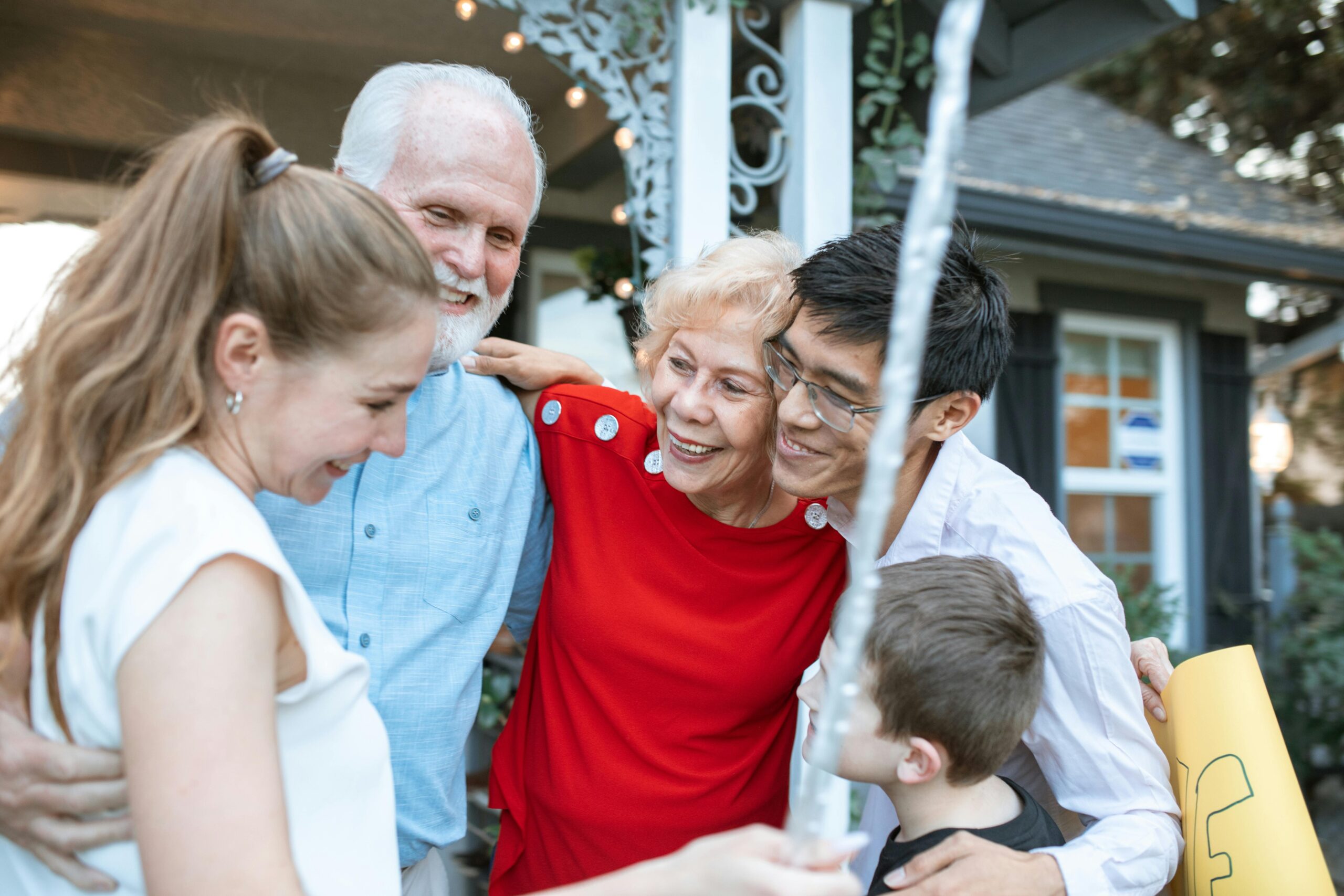
 This holiday season, what are you most looking forward to? Is it time with loved ones, sharing activities like watching football the day after Thanksgiving, or time around the table over favorite holiday meals? Is it the food – your aunt’s sweet potato casserole or your abuela’s tamales – or do you cherish the holiday traditions that bridge the generations?
While people have different ways to celebrate the holidays between now and the new year, what they have in common is the desire to spend time with family and friends, building that feeling of connection, of knowing and being known, and making memories. But the experience of creating meaningful connection can be a challenge, not only with the extra hustle and bustle this time of year, but also by the cognitive decline that many of our elderly loved ones experience. It can be hard to look forward to the holidays when you don’t quite know how to connect with an elderly loved one or a loved one who has dementia.
This year, let us help you with suggestions on how to be present and intentional with the time you spend with parents and grandparents to foster deeper, more cherished relationships, even when cognitive decline is involved.
Plan Ahead
Getting a multigenerational group together takes effort, but is well worth the investment. My favorite memories of childhood are the holidays at my mom’s childhood home, running around with my brother and cousin, having time with my grandfather, hearing stories around the table, and enjoying all the traditional holiday foods. I now know how much work went into creating that time together – sharing the tasks of shopping, cooking, preparing food ahead of time so we could all be present and relaxed for those short times together. I now am in the role of planning ahead so when the kids come to town, the shopping is done, and anything that can be made in advance is in the fridge or freezer. I don’t want to miss a minute of non-distracted time with my family!
Planning ahead is even more important when a loved one has cognitive decline. It is important to consider where family events take place to minimize confusion. Most importantly, it is important to educate other family members about how to engage with a loved one with dementia. Tell them ahead of time if Grandma is struggling to remember names, and teach them how to keep a conversation moving even if she tells the same story over and over. Loving looks like not shaming them for unknowingly telling that same story or confusing who someone is.
Encourage the Art of Storytelling
There is nothing like a story to connect the generations. While some families have natural storytellers, others might need a little help getting older family members to tell tall tales from days past. There are games and books created for just this purpose, and they can be used even when someone has cognitive decline. Memories of the early years of their lives are often the last to be forgotten, so capture them while you can.
Tales.com has multiple game options, including the Life Story Edition that shares 150 questions covering Early Life, Mid Life, Later Life, and Reflections. The questions will help you uncover stories and details you never knew because the conversation on that topic never came up. You’d be amazed at the things you learn when you ask the “right” question.
There are also books such as The Book of Myself: A do-it-yourself autobiography in 201 questions. This book has a fill in the blank format, perfect to use with your aging loved ones, to capture their stories before they are lost to future generations.
You can also make your own list of questions ahead of time and write them on notecards, creating your own game. Start with questions such as “What were the holidays like when you were a child? What is your favorite holiday food and who made it for you first? Who taught you to make it?” Once you get the conversation started, you will be surprised at the stories you hear! Just last year my father-in-law shared stories that even his kids had never heard about his years in college. How I wish we had a recording of his stories, and the shared laughter around the table.
If possible, bring old family photos and videos to your holiday gathering (you know, the kind that are printed on paper or a plastic disc). This naturally sparks memories and provides a visual way to share family history with younger generations, even if it is just showing them how older generations used to store memories (i.e. not digitally!). What could be more fun than to see Grandpa as a toddler or precocious teen, or to see the ways a family resemblance passes through the generations?
Prioritize Presence
Nothing says I love you more than giving someone your full attention. That can be challenging in a world with so many digital distractions, but some simple boundaries can help you create “no phone zones” during and after dinner, or whenever conversation time works best for your family.
The holidays can be stressful, so embrace flexibility and patience, letting go of the need for everything to be perfect. Sometimes, simply enjoying each other’s company is the most meaningful connection of all. By focusing on these intentional connections, you can ensure the holiday season is filled with warmth, understanding, and cherished moments with your parents and grandparents.
